About Amplifly

Built from lived experience, not a feature brief.

Amplifly started as a personal tool. It became an app because nothing else was honest about what ND brains actually need.

Who's building it

Two founders, one rule.

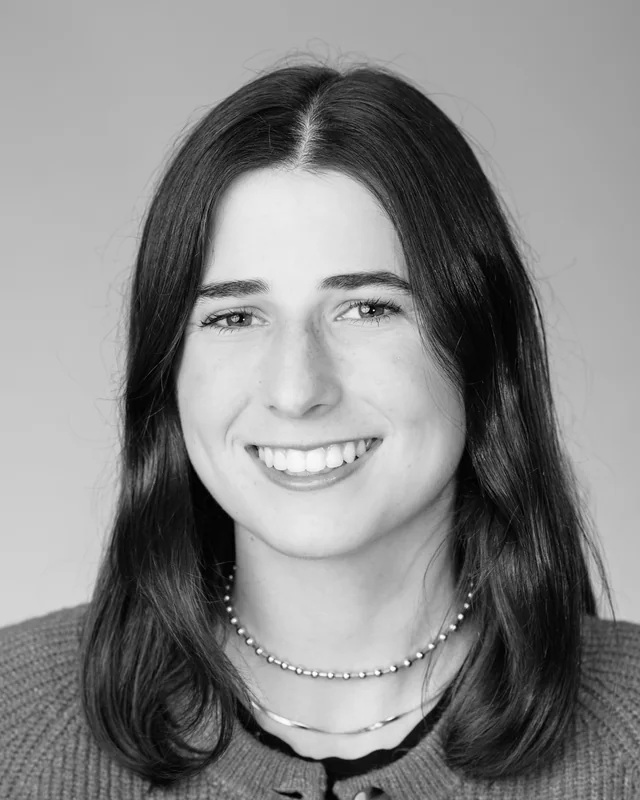
Lily Stone, founder of Amplifly

Hi, I'm Lily Stone

Founder, Amplifly

I'm a neurodivergent founder who spent years trying to use productivity tools that assumed my brain worked the same every day. It doesn't. None of ours do.

Amplifly grew out of a simple question: what if an app actually started with how your brain feels today, instead of treating every morning like a blank slate? The five brain states, the conditions, the operating manual — all of it came from trying to understand my own patterns and finding no tool that did it honestly.

The technology should adapt to neurodivergent minds, not the other way around. That's the whole point.

LinkedIn
Michael Moschello, founder of BioProxal

Hi, I'm Michael Moschello

Founder, BioProxal

I'm the founder of BioProxal, a separate company building a wrist-worn optical sensor specifically for Amplifly. Lily and I are working together to bring the BioProxal wearable to the app as an optional live signal alongside your check-ins.

BioProxal's rule is the same as Amplifly's: the wearable does its own thinking. Heart rate, HRV, and flow are computed on the device itself, and the app only ever receives finished numbers — never a raw signal.

The integration is in development and is not in the App Store build yet. There is no release date.

LinkedIn

What Amplifly actually is

Six parts. No magic.

Every part of the app, described the way it's built, including what each piece can't do yet.

  1. A brain state tracker

    Five states — Buzzing, Sharp, Flat, Foggy, Scattered — that capture how ND brains actually feel day to day. You pick one when you wake up and update it whenever it shifts — every check-in is timestamped. No wrong answer.

  2. A condition recommender that learns

    Twelve built-in conditions across four phases — primers, protectors, recovery, and resets — plus any tool you add yourself, which becomes a first-class option with the same standing as the built-ins. An on-device Thompson-sampling bandit learns which conditions work for your specific brain state, time of day, and ND profile. It starts from research priors and anything you tell it about yourself, and after roughly ten to twenty real outcomes in a cell, your own results outweigh both.

  3. A flow logger

    After any deep work block, log how long, how locked-in you were, what helped, what drained you, and which condition you used. 60 seconds. This is the data that builds your manual.

  4. A focus timer that logs itself

    Start a work session in the app — 25, 50, or 90 minutes, or no limit, with optional breaks that alert you even if the app is closed. When you stop, the log opens with the measured duration already filled in; you add what you worked on and how it went.

  5. A flow forecast that says what it is

    A small neural network predicts how focused you are likely to be given your brain state, ND profile, and time of day. It was trained on a synthetic dataset built from published research, not on real participants, and its weights are fixed. It calibrates against the sessions you log, and it tells you when it is still running on priors instead of your data.

  6. Your operating manual

    The Manual tab synthesises everything into a living document: your sharpest hour, your highest-flow brain state, your top helpers and drains, your streaks, what the recommender has figured out. The more you log, the sharper it gets.

Where your data actually lives

How it's built, not a policy summary.

The privacy policy is the formal version. This is what actually happens to what you log.

  • Your phone comes firstEvery check-in, session, and setting is written to your phone's local storage the moment you save it. The screen never waits on the network, and the app keeps working with no connection once you are signed in. The phone holds a bounded recent copy — your last 2,000 check-ins and 365 sessions — and your account holds the full history.
  • Your account is the backupAmplifly requires an account. Each write is pushed to it in the background right after it lands on your phone, and signing in on a new phone pulls your history back down. Deletions are queued and replayed if you were offline, so nothing you removed comes back. Data travels encrypted in transit and sits in Supabase, isolated to your user ID, only so it is there on your next device. It is never sold or shared.
  • What syncsYour name and ND profile, brain check-ins, flow sessions, the recommender's learned state and each outcome it learned from, the things you told it about yourself, and any tools you added. That is the whole list for the version on the App Store today.
  • Every algorithm runs on your phoneThe recommender and the flow forecast are plain code inside the app. Nothing you log is sent anywhere to be scored, and no model is trained on our servers. There are no analytics, crash-reporting, or advertising SDKs in the app. Break reminders are local notifications scheduled by your phone.
  • The wearable versionThe BioProxal integration keeps the same rule: readings are computed on the wearable, and the app receives only finished numbers, never a raw signal. It is not in the App Store build, and the privacy policy will be updated to describe the wearable data flow before it ships.
  • LeavingSign out and syncing stops immediately; your local data stays on your phone. To delete your account and everything stored under it, email hello@amplifly.me.

What's live, and what's next

Two versions. A clear line between them.

Live today

Amplifly Lite

The software-only release, on the App Store for iOS. Everything described above (brain states, conditions, the recommender, the forecast, the Focus timer, the manual) with no hardware required.

Get it on the App Store

In development

BioProxal wearable integration

Built with Michael and BioProxal: an optional wrist-worn optical sensor that computes a flow score, heart rate, HRV, SpO2 and breathing rate on the wearable itself and sends only those finished values to the app over Bluetooth. It will ship as an update to the same app, so your history carries forward. Not in the App Store build, and no release date yet.

How it's built

What guides us

Four rules we don't bend.

  1. ND brains, not 'fixed' brains

    Amplifly doesn't treat neurodivergence as a problem to solve. It treats it as a context to understand.

  2. Privacy as a feature

    Your data is yours. Written to your phone first, computed on your phone, synced only to your own account so it survives a new device. Fully explained, no surprises.

  3. Honest technology

    The recommendation engine is a Thompson-sampling bandit, not "AI magic." The forecast is a neural network with documented architecture, and it tells you when it is running on synthetic priors versus your data. We explain how things work — and we say what is shipped versus still in development.

  4. Progress over perfection

    Missed a day? Your streak resets but your posteriors don't. The app never punishes you for being human.

Get in touch

hello@amplifly.me

Questions, feedback or support. We read every email.